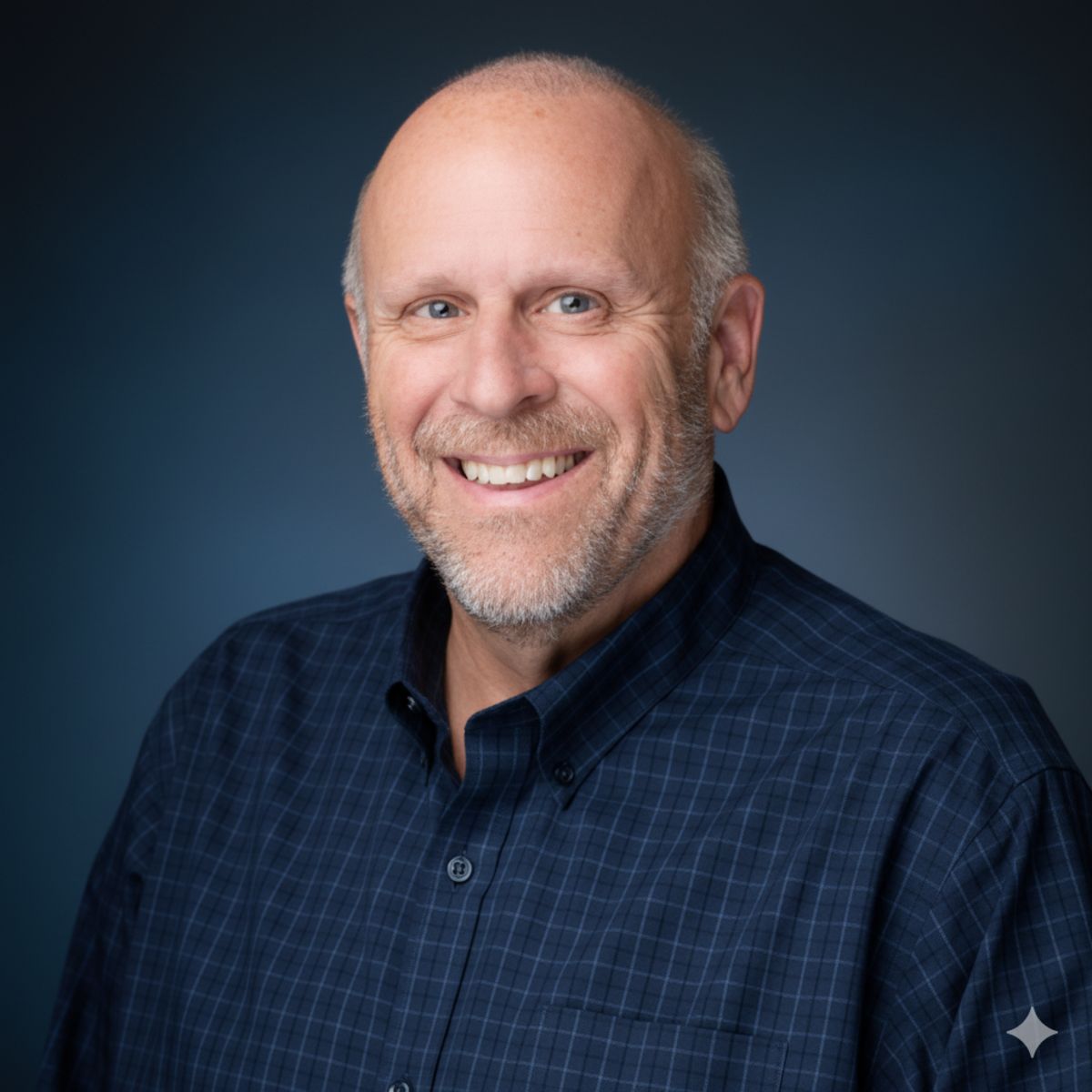

By Curt Roese | Published: April 7, 2026
Soft retirement is a deliberate, structured transition from full-time work to full retirement over months or years rather than overnight. For professionals 55 and older, it outperforms the cliff retirement model on portfolio survival, Social Security optimization, and healthcare cost management. The math is straightforward and most financial plans never run it.
This post covers what soft retirement actually means, why the financial case is stronger than most people realize, how the three primary business models work in practice, and what to do before you make any decisions about your transition.
What Is Soft Retirement and Why Are So Many Professionals Choosing It?
The cliff retirement model, work full time then stop completely overnight, was built on three assumptions that no longer hold for most professionals. It assumed shorter lifespans, reliable pension income, and employer-covered healthcare through retirement. None of those are guaranteed today.
A 65-year-old in 2026 can reasonably expect 25 to 30 more years of life. Most professionals rely on portfolios rather than guaranteed monthly pension checks. And healthcare between your last day of work and Medicare eligibility at 65 is one of the most significant financial gaps in any retirement plan.
Soft retirement, also called phased retirement or semi-retirement, is the deliberate alternative. You reduce your work commitment gradually over months or years, replacing a portion of your income through consulting, coaching, or a course and cohort and community business, while your portfolio stays largely intact and your Social Security benefit keeps growing.
The data confirms this is not a fringe path. Fidelity's 2026 State of Retirement Planning Study found that 61% of Americans intend to transition into retirement gradually rather than stop all at once. Among those planning a gradual transition, the top approaches included gig work and side hustles at 35%, starting a small business at 29%, and consulting part-time at 26%. The same study found that 72% of Americans expect to retire on their own terms, up five percentage points from the prior year.
I am a CPA and former CFO. I retired at 61, went back for a master's in entrepreneurship at 63, and have been building Retirepreneur in real time ever since. The reason I focus on this topic is not theory. It is because the financial case for a structured transition is one most retirement plans simply never model, and that gap costs people real money.
What Does the Soft Retirement Math Actually Look Like?
Here is the number that changes the conversation. If your monthly living expenses are $5,000 and you bring in $3,000 from a consulting engagement, your monthly portfolio draw drops from $5,000 to $2,000. That single shift does not just improve your cash flow. It can extend your portfolio life by years, sometimes by a decade, depending on your starting balance, return assumptions, and how long the partial income continues.
Most financial advisors model your withdrawal rate at retirement. They do not model what happens to your portfolio when you cut that withdrawal rate by 60% because you are still generating income.
The more important argument, and the one most retirement plans completely miss, is sequence of returns risk. A market downturn in your first two or three years of full retirement is one of the most damaging financial events a retiree can face. When markets fall and you are fully dependent on your portfolio, you are forced to sell more shares at lower prices to cover the same monthly expenses. That damage compounds. You lock in losses at the worst possible moment and a recovering market cannot fully undo the arithmetic.
Soft retirement income changes this directly. Even reducing your monthly draw from $5,000 to $2,000 during a market downturn gives your portfolio meaningful breathing room while prices recover. Fully retired investors do not have that option. This is not just an income strategy. It is a risk management tool that most financial plans never put on the table.
Consider a professional who retires at 62 with a $1.2 million portfolio and immediately begins drawing $5,000 per month. Now consider the same professional with $3,000 per month in consulting income drawing only $2,000 from the portfolio. Over a three to five year horizon, particularly if markets experience any volatility in those early years, the difference in portfolio value is not marginal. It is structural.
How Does Soft Retirement Affect Your Social Security Benefit?
Every year you keep earning is a year your Social Security benefit keeps growing. Most retirement plans treat Social Security timing as a separate decision from work transition planning. Soft retirement connects them directly.
Delay claiming Social Security to age 70 and your monthly benefit can be up to 32% higher than at full retirement age, according to the Social Security Administration. That is not a rounding difference. It is a permanent, inflation-adjusted increase in guaranteed monthly income for the rest of your life.
Most retirement plans optimize one lever: either the portfolio withdrawal rate or the Social Security delay. Soft retirement optimizes both simultaneously. Every month you are earning partial income is a month your portfolio goes largely untouched and a month your Social Security benefit keeps compounding toward its maximum.
There is also the Social Security earnings test to understand before you start. If you claim before full retirement age and earn over $24,480 per year in 2026, your benefit is reduced by one dollar for every two dollars earned over that threshold. This is not a reason to avoid soft retirement. It is a planning input. A CPA who understands the threshold can structure your consulting income to keep you on the right side of it.
What Does Healthcare Cost Between Early Retirement and Medicare?
Stopping work before age 65 creates a healthcare coverage gap that most retirement plans underestimate or ignore entirely. Medicare eligibility begins at 65. If you retire early and lose employer coverage, ACA Marketplace premiums for early retirees typically run $8,000 to $25,000 annually depending on age, location, and income subsidies.
Over a three to five year bridge period, that is a significant portfolio protection decision. The range is wide because marketplace premiums vary considerably based on where you live, your age, and whether your income qualifies for premium tax credits.
With 11,400 Americans turning 65 every single day in 2025 (Alliance for Lifetime Income), the Medicare bridge is one of the largest financial planning decisions this generation faces. Most retirement conversations never surface it as a standalone line item.
Soft retirement income directly addresses this gap in two ways. If you remain attached to an employer arrangement, you may retain employer plan access. If you are fully independent, consulting or coaching income can make marketplace premiums manageable without drawing additional funds from your portfolio. In either case, partial income during the bridge years protects a significant portion of your retirement savings.
What Are the Three Business Models That Make Soft Retirement Work?
The income side of soft retirement does not require starting a company from scratch, building a brand, or learning an entirely new skill. Three models are built specifically for professionals with deep domain expertise making this transition. I call them the 3 Cs.
| Model | Structure | Income Range | Time Commitment | Best For |
|---|---|---|---|---|
| Consulting | Project-based, defined scope | $3,000 to $10,000+ per month | Flexible, project-driven | Executives and domain specialists with a specific solution to sell |
| Coaching | Recurring monthly relationships | $500 to $2,000 per client per month | 10 to 15 hours per week | Professionals who want ongoing relationships and predictable income |
| Course / Cohort / Community | Build once, sell repeatedly | $497 to $2,000+ per offering | High upfront, low ongoing | Professionals with a teachable framework and patience to build an audience |
Consulting is typically the fastest path to meaningful income for professionals in this audience. You are selling 40 years of judgment, not your time. One client at $3,000 per month directly reduces your portfolio draw and funds a portion of the Medicare bridge. You do not need a website to find your first client. You need a clear offer and one conversation with your existing network.
Coaching works differently and for many professionals fits better. The recurring income structure smooths out the feast or famine cycle of project work. As your client roster grows, the income grows with it. The expertise is already inside you. Coaching does not require a new credential. It requires packaging what you know into a repeatable framework that guides clients toward a defined outcome.
Course and cohort and community models are the highest-leverage option for professionals with a teachable framework, but they are typically a second-stage strategy. Building an audience takes time, usually 12 to 24 months before revenue becomes meaningful. Start with consulting or coaching. Build toward courses in parallel.
All three models run on expertise you already have. Low startup capital. No new credentials required.
What Tax and Benefits Numbers Do You Need to Know Before You Start?
Two specific numbers belong in your planning before you set a single rate or sign a single client agreement.
The IRMAA threshold sits at $109,000 in modified adjusted gross income for single filers in 2026. Income above that level triggers Medicare surcharge increases that most soft retirees never anticipate because they never had to think about it before retirement. The surcharges can be significant depending on how far above the threshold your income lands.
The Social Security earnings test threshold is $24,480 per year in 2026 if you claim before full retirement age. Benefits are reduced by one dollar for every two dollars earned above that limit. Again, this is not a stop sign. It is a planning input that determines when you claim and how you structure your consulting income.
One conversation with a CPA who understands both thresholds before you launch can save meaningful money. As a CPA myself, this is the analysis I walk every professional through before they finalize their transition plan.
How Do You Build a Soft Retirement Plan That Actually Works?
A structured transition requires five decisions in order. The sequence matters.
- Define your monthly income target. How much do you need to generate to cut your portfolio draw in half? Start with that number, not a business name or a website.
- Identify your most marketable expertise. What specific problem did you solve repeatedly over a 30-year career that someone would pay to have solved today?
- Choose your delivery model. Consulting, coaching, or course and cohort and community. Pick one to start. You can add others later.
- Set your Social Security delay date. Model the difference between claiming at 62, at full retirement age, and at 70. The numbers make the decision easier than most people expect.
- Set an endpoint. Define what fully retired means to you in concrete terms and work backward from that date.
That last step matters more than most people realize. Without a defined endpoint, soft retirement becomes indefinite employment. One more year of income. One more year of delay. The transition never completes because there is no finish line. Set the date before you start.
Frequently Asked Questions About Soft Retirement
What is the difference between soft retirement and semi-retirement?
The terms are used interchangeably in most contexts. Both describe a deliberate, structured reduction in work commitment rather than a complete overnight stop. Soft retirement tends to emphasize the financial planning side of the transition, while semi-retirement more broadly describes the lifestyle outcome. For planning purposes, treat them as the same concept and focus on the financial structure rather than the label.
How much money do you need to start soft retirement?
The right question is not how much you need saved but how much monthly income you need to generate to make the math work. If your monthly expenses are $5,000 and you can replace $2,500 to $3,000 through consulting or coaching, your portfolio draw drops dramatically and your transition becomes financially sustainable at a much lower savings threshold than a full cliff retirement would require.
Does soft retirement income affect Social Security benefits?
It can, depending on your age and the amount you earn. If you claim Social Security before full retirement age and earn more than $24,480 per year in 2026, your benefit is reduced by one dollar for every two dollars earned over that limit. If you wait until full retirement age or later to claim, the earnings test no longer applies. This is one of the strongest arguments for delaying your claim while you are still generating soft retirement income.
What is the best consulting model for soft retirement?
For most professionals transitioning out of executive or senior specialist roles, project-based consulting is the fastest path to meaningful income. You define the scope, set the timeline, price based on the value of your judgment rather than your hours, and maintain full schedule flexibility. One engagement at $3,000 to $5,000 per month changes your entire retirement math without requiring a full practice to be built.
How does soft retirement affect Medicare premiums?
Income in retirement affects Medicare Part B and Part D premiums through the IRMAA surcharge system. In 2026, the surcharge cliff starts at $109,000 in modified adjusted gross income for single filers. If your consulting or coaching income pushes you above that threshold, your Medicare premiums increase. This is a planning input, not a reason to avoid soft retirement income. Structure your consulting engagement fees and timing with a CPA who understands the threshold before you finalize your rates.
Can you do soft retirement if you do not want to consult in your old industry?
Yes. The coaching model and the course and cohort and community model both work for professionals who want to apply their expertise in a different context or help a different audience. Many professionals use soft retirement as an opportunity to shift from their primary industry expertise toward a broader leadership, career, or life transition coaching practice. The delivery model matters less than the clarity of the problem you solve and the audience you serve.
How long does a typical soft retirement transition take?
A well-structured transition typically runs three to five years. Year one focuses on defining the offer and landing the first client or coaching engagement. Years two and three replace a meaningful portion of monthly portfolio draws. Years four and five allow Social Security to keep growing toward its maximum before you make the final claim decision. The endpoint date you set before you start determines the pace of the entire transition.
The Soft Retirement Decision Comes Down to Three Numbers
Soft retirement is not a compromise. It is a deliberate financial strategy that outperforms the cliff retirement model on portfolio survival, Social Security optimization, and healthcare cost management when the transition is structured correctly.
The three numbers that drive the decision are your monthly portfolio draw under a full stop versus a partial income scenario, your Social Security benefit at 62 versus full retirement age versus 70, and your healthcare bridge cost between your last day of employment and Medicare eligibility at 65.
Most retirement plans model the first number in isolation. They ignore the second and third entirely. Running all three together, across a hard stop scenario, a three-year soft transition, and a five-year soft transition, produces a comparison that changes how most professionals think about their timeline.
Fidelity's 2026 State of Retirement Planning Study found that Americans with a financial plan in place are more than twice as likely as their peers to feel confident about their retirement prospects. The plan does not have to be perfect. It has to exist and account for all three numbers.
The expertise you built over 30 or 40 years is the asset most retirement plans leave off the balance sheet. Soft retirement puts it back on.
If you want frameworks, templates, and model-specific guides for building a consulting, coaching, or course and cohort and community business as your soft retirement engine, the Retirepreneur Hub has everything you need to get started. Free access, no credit card required.
Next Steps
Open your current retirement plan and find your assumed monthly withdrawal rate from day one of retirement. Then run one alternative scenario: what does that number look like if you generate $2,000 to $3,000 per month from consulting or coaching for the first three years? Use Boldin (retirepreneur.link/boldin) to model all three scenarios side by side. That comparison is the most useful thirty minutes you will spend on your retirement plan this year.
About the Author: Curt Roese is a CPA, former CFO, and the founder of Retirepreneur, a platform helping professionals 55 and older turn decades of expertise into consulting, coaching, and course and cohort and community businesses. He retired at 61, earned a master's in entrepreneurship at 63, and builds Retirepreneur in real time alongside his audience. Learn more about Curt.