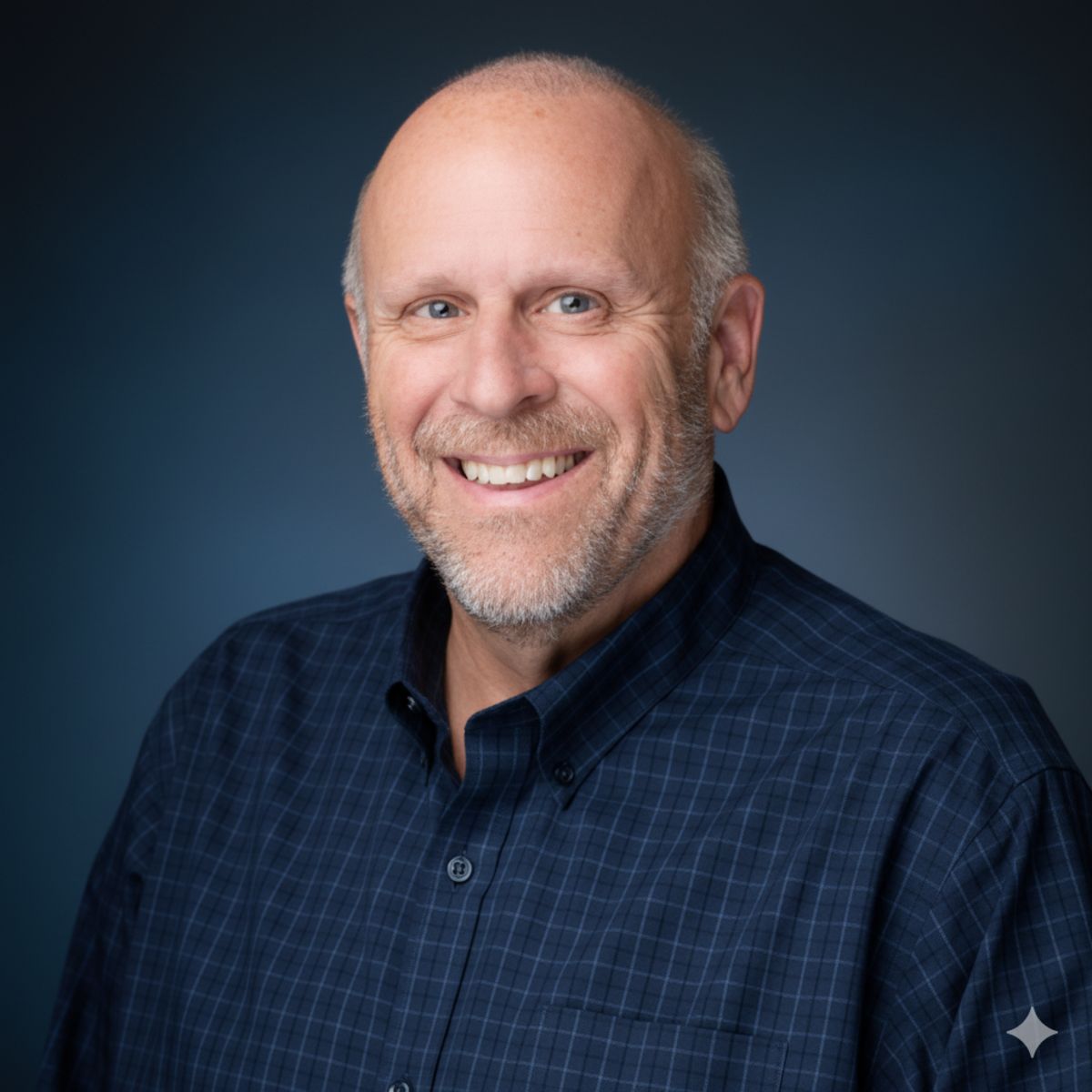


Hey, it's Curt.
In today's issue:
I finally have a content production system that fits inside a single Monday block. Here is what that actually looks like in practice.
The retirement math most financial advisors never run. One number changes everything.
Fidelity just released their 2026 retirement planning study and the headline stat will not surprise you. The breakdown behind it will.
And more...
Keep Building!
Quick Hits
📌 This week — This issue covers soft retirement: the structured, deliberate transition from full-time work to full retirement that outperforms the cliff model on almost every financial measure. If you have ever felt like a hard stop was your only option, this one is for you.
💡 The insight — Soft retirement income is not just income. It is a risk management tool that lets you reduce your portfolio draw during a market downturn, when fully retired investors have no such option.
🎧 Listen — This week on the podcast: the soft retirement financial case, broken down in audio. Worth a listen on your next walk. Find it at 👉 retirepreneur.com/podcast.
🔍 Explore Further — Fidelity's 2026 State of Retirement Planning Study found that 72% of Americans expect to retire on their own terms, and that 61% plan to transition gradually rather than stop cold. The breakdown of how they plan to get there maps directly to the math in this week's featured story. 👉 Read the full study here.
🔨 Still Building
Here is what a Monday content production block actually looks like when it is working. One article becomes a newsletter, a blog post, a podcast episode, a YouTube video, and a full week of LinkedIn content before I close my laptop.
The assembly line runs on a small stack of tools. I write and edit in Claude, produce podcast audio in NotebookLM, edit video in Descript, build graphics in Gamma, and schedule everything through Buffer.
The three platforms doing the real distribution work are Beehiiv for the newsletter, LinkedIn for daily presence, and YouTube for the long-form video that anchors the week. Still figuring out how to make all three work together consistently. But the system is there, and that is further than I was six months ago.
Still Building
Curt

📰 Featured Story
The Cliff Was Never the Only Option
Most professionals are not afraid of retirement. They are afraid of the overnight drop from a 30-year career to a full stop, and the financial plan most of them have does not account for a smarter path.
Here is what that smarter path actually looks like. It is called soft retirement, and the case for it is not emotional. It is math.
The Math Your Financial Advisor Never Ran
Start with a number most financial plans never model. $5,000 in monthly expenses with $3,000 in consulting income means a $2,000 portfolio draw, not $5,000.
(disclaimer: this is a simplified example and there are many factors to consider, consult with your professional advisors).
That single shift does not just improve your cash flow. Reducing your monthly withdrawal extends your portfolio life significantly, and the effect grows over time as compounding works in your favor instead of against you.
The bigger risk is sequence of returns. A market downturn in your first two or three years of full retirement forces you to sell more shares at lower prices to cover the same expenses.
Early portfolio damage compounds hard. You are drawing down while share prices are at their lowest, locking in losses that a recovering market cannot fully undo.
Reduced withdrawal during a down market is the lever fully retired investors do not have. Even cutting your monthly draw from $5,000 to $2,000 during a downturn changes the recovery math meaningfully. That is the part most financial plans never show you.
"Soft retirement income is not just income. It is a risk management tool."
Two Things Growing While You Work
Every year you keep earning, two things happen simultaneously. Your portfolio draw stays lower and your Social Security benefit keeps growing.
For professionals born in 1960 or later, claiming Social Security at 62 means receiving 70% of your full benefit. Delay to 70 and that number jumps to 124%, a 77% increase in your monthly check that is permanent and inflation-adjusted for the rest of your life (Social Security Administration). That is not a rounding difference. It is a permanent increase in guaranteed monthly income for the rest of your life.
Most retirement plans optimize one of those levers. Soft retirement optimizes both at the same time.
There is a third number most people overlook completely. Stopping work before 65 creates a healthcare coverage gap before Medicare eligibility, where ACA Marketplace premiums typically run $8,000 to $25,000 annually depending on age, location, and income subsidies.
With 11,400 Americans turning 65 every day in 2025 (Alliance for Lifetime Income), this bridge cost is a massive planning decision most people never see coming. Soft retirement income is often what funds it.
The Business Models That Make the Math Real
The income side of soft retirement does not require starting a company or learning something new. Three models are built specifically for professionals making this transition.
→ Consulting: project-based, high rate, no full-time commitment. One client at $3,000 per month directly reduces your portfolio draw.
→ Coaching: recurring monthly relationships, predictable income, typically 10-15 hours per week
→ Course/cohort/community: build once, earn with significantly less ongoing time than consulting or coaching
All three run on expertise you already have. Low startup capital. No new credentials required. Fidelity's 2026 State of Retirement Planning Study found that 61% of respondents intended to transition into retirement gradually rather than stop all at once. The path is not fringe. It is becoming the default.
Run Your Own Numbers Before You Decide
Boldin (retirepreneur.link/boldin) is the tool built for exactly this comparison. It is free to start and built specifically for retirement income modeling.
Input your numbers and run three scenarios:
→ Hard stop: full portfolio draw from day one, Social Security claimed early, no income buffer
→ Soft three-year transition: partial income reduces your monthly draw, Social Security delayed, Medicare bridge partially funded
→ Soft five-year transition: lower draw sustained longer, Social Security delayed to near 70, healthcare bridge covered
The difference in portfolio survival across those three scenarios is the number that makes this decision clear.
The full version is at retirepreneur.com/blog — more depth, more context, fully searchable.
🕰️ Remember When

🔓 Inside the Hub
If you are reading this week's article and thinking "I need a system to actually execute this," the Hub has a resource built for exactly that. The Retirepreneur Content Assembly Line Cheat Sheet walks you through how one article becomes a full week of content across your newsletter, podcast, YouTube channel, and LinkedIn.
It is the same system I use every Monday.
It is free, no credit card required, and built specifically for professionals 55+ who want a repeatable production process without a team behind them.
🎯 Next Steps
Your Move
Pull up your current retirement plan and find your assumed monthly withdrawal rate. Then model what happens to that number if you add $2,000 to $3,000 in monthly consulting or coaching income during your first three years.
Go Deeper
This week's YouTube video is the full CFO-lens breakdown of soft retirement: the portfolio math, the Social Security multiplier, the Medicare bridge, and the three business models that make the transition work financially. 👉 Watch Now
💬 Something to Sit With

🤝 Share Retirepreneur
If you got something useful from this week's issue, the best thing you can do is share it with one person who needs it.
No pitch required. Just forward it. Every person who finds this community makes it better for all of us. Thank you in advance, it is very much appreciated!

Curt Roese, CPA
Founder, Retirepreneur | Former CFO
M.S. Entrepreneurship, University of Florida
Building Retirepreneur in real time at 63. Still building.