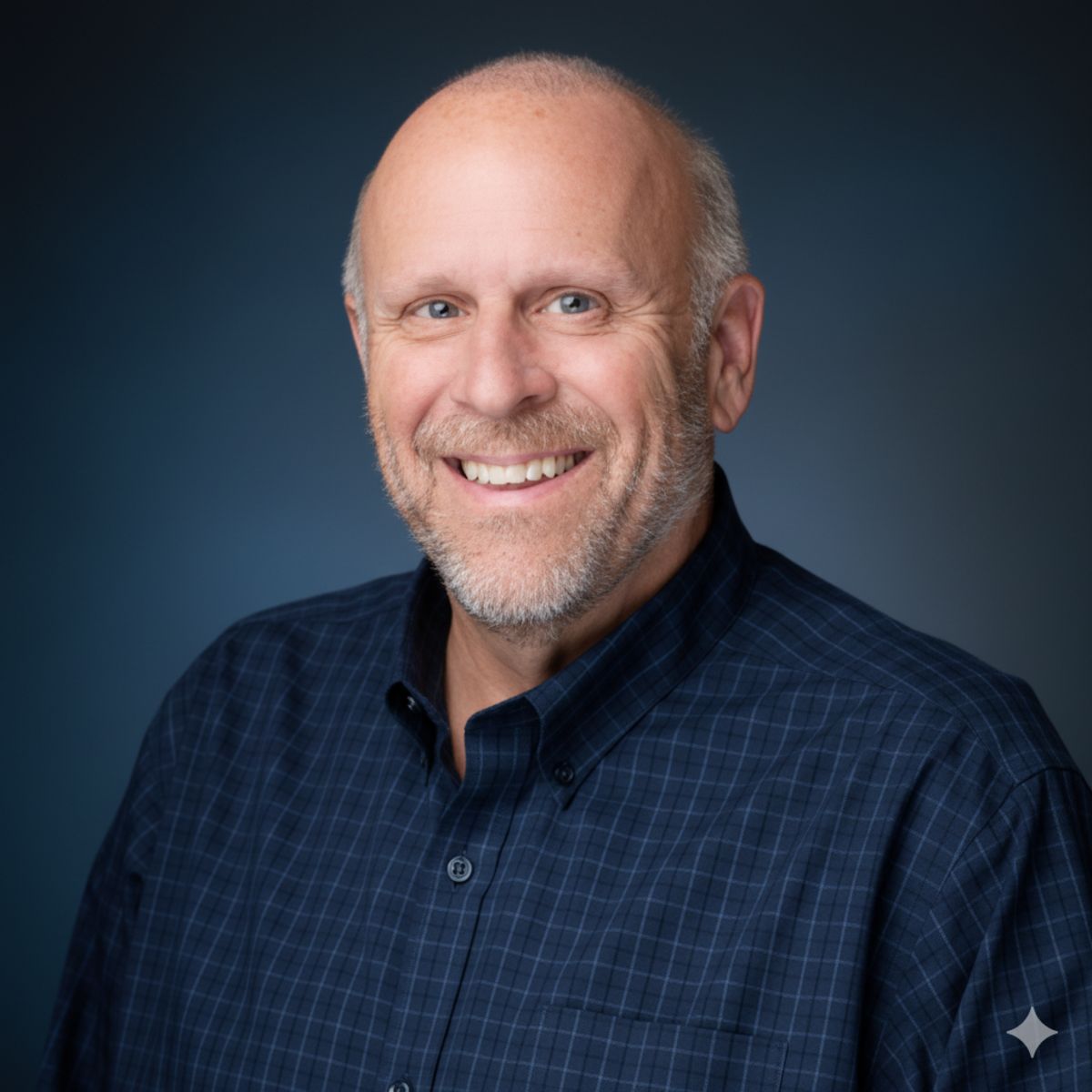

By Curt Roese | Published: August 16, 2026 | Last updated: August 16, 2026
The best retirement income ideas for professionals over 55 aren't a list to pick from. They're a sequence. Phased retirement, consulting, and fractional executive work build on each other, while coaching, courses, board seats, speaking, and referral brokering serve as supplements, not primary strategies. The right choice depends on your timeline, your network, and what the after tax number actually looks like once you run it.
I built this framework after 40 years as a CFO and CPA, and after spending the last two years testing pieces of it in my own transition. Below, I walk through each option, the sequence that works for most professionals, and the tax mechanics that change your real number. If you'd rather watch me talk through it first, here's the video this article expands on.
How Should You Think About Retirement Income Options in the Right Order?
Most professionals rank income ideas by which sounds most interesting. That's backwards. The better question is which option fits where you actually are right now, not where you'd like to be in three years.
For most professionals in this audience, there's a logical arc. Phased retirement provides the first bridge while you're still connected to an employer. Consulting converts that momentum into independent income. Fractional executive work is what consulting evolves into once credibility and predictability matter more than variety.
Everything else, coaching, courses, board work, speaking, referral brokering, is real and can work well for the right profile. But none of it follows that same building arc. Treat those as parallel tracks, not substitutes for the main sequence.
What Is Phased Retirement and Why Is It Underused?
Phased retirement is a negotiated reduction in hours with your current employer, often with proportional pay and continued benefits. It's the most underused option in this framework because it requires no new clients, no positioning, and no ramp time.
Nearly four in 10 HR executives now report offering some form of phased retirement, more than double the share before the pandemic, according to workforce research cited by Fortune in late 2025. That's a meaningful shift in employer willingness.
The real value isn't the income while the arrangement is active. It's the runway it buys you. For professionals between 60 and 65 who aren't yet Medicare eligible, retained employer health coverage during that window is one of the most financially significant benefits available in this entire framework.
Should You Start Consulting Before or After You Leave Your Job?
Start before. Consulting fails most often not because of weak expertise, but because professionals wait until after they've left to build their pipeline, and by then a warm network has already cooled.
The professionals I've watched transition successfully started conversations while still employed. Not selling, just telling people a transition was coming and planting seeds before the ground went cold.
At the senior level, consulting draws on expertise and a network you've already built. Time to first dollar runs 30 to 60 days if that network is warm. But the retainer number you negotiate is gross. What closes your income gap is what's left after self employment tax, which I'll get to below.
What's the Difference Between Consulting and Fractional Executive Work?
Consulting is project based and episodic. Fractional work is a defined part time role with one company, usually a recurring monthly arrangement where you own outcomes, not just deliverables.
This distinction trips people up constantly. They treat fractional work as a faster version of consulting, but the structures and expectations are genuinely different.
The fractional executive market has grown quickly, with fractional CFO retainers commonly running $8,000 to $18,000 per month, according to 2026 market benchmarking from Fractionus. What makes fractional work valuable isn't the ceiling. It's the predictability, which matters a great deal when you're managing a retirement income gap month to month.
One structural note worth flagging early. Fractional roles can be W2 through a placement firm or 1099 as an independent contractor. The tax treatment differs meaningfully between the two, so confirm which structure you're signing before you negotiate rate.
Where Do Coaching, Courses, Boards, Speaking, and Referral Work Fit?
These five options are legitimate income sources, but each requires something the main arc doesn't: building a new practice, a new audience, or leaning on relationship capital you may not have yet.
Coaching delivers expertise to individuals instead of organizations, and it requires a positioning system and client acquisition approach, not just knowledge. Expect 60 to 120 days minimum to first revenue.
Cohort based courses carry the highest leverage in this framework but also the longest runway, 90 to 180 days minimum, and only after you validate demand with paying participants before you build the curriculum.
Board and advisory work is almost entirely relationship driven. You don't apply for these seats, you get introduced to them, which makes this a poor primary strategy if you're starting from zero network capital in a given sector.
Paid speaking works best as a credibility investment early on, with income becoming a secondary benefit once it amplifies your consulting or fractional positioning.
Referral brokering is the option I'm most cautious naming as a retirement strategy, because income depends entirely on deal flow you can't control. It's a parallel activity, not something to build a plan around.
Retirement Income Options Compared
Why Does Gross Income Overstate What You'll Actually Keep?
Every figure above is gross. What closes your retirement income gap is the after tax number, and for self employed professionals those two numbers can differ substantially. Four factors drive the gap.
Self employment tax. You owe both the employee and employer share of payroll tax, 12.4% for Social Security up to the 2026 wage base of $184,500, plus 2.9% Medicare on all net earnings. That's 15.3% before income tax even applies, confirmed by the Social Security Administration's own 2026 figures.
The Social Security earnings test. This only matters if you're collecting benefits before full retirement age. For 2026, the limit is $24,480 if you're under full retirement age all year, rising to $65,160 in the year you reach it, per SSA. Once you hit full retirement age, the limit disappears entirely.
ACA subsidy exposure. This is the one I'd flag hardest for anyone in the 60 to 65 window. Starting with the 2026 tax year, the caps that used to limit how much excess premium tax credit you had to repay are gone. If your income comes in higher than you projected at enrollment, you may owe back the full excess with no ceiling, per healthinsurance.org's 2026 guidance on premium tax credit reconciliation. Income design in this window isn't a background consideration. It's a foreground one.
Medicare IRMAA. For those already on Medicare, income above certain thresholds triggers premium surcharges on Part B and Part D, based on income from two years prior. Factor it into planning, not as a reason to avoid income, but as a number to account for.
One more thing worth a conversation with your CPA once net self employment income reaches a meaningful level. An S corporation election lets you pay yourself a reasonable salary subject to payroll tax and take remaining profit as a distribution that generally isn't. The savings can be real, but this is a dedicated CPA conversation, not something to DIY.
What's the Simplest Way to Decide Which Option to Build First?
If you need income within 90 days, phased retirement is the answer if it's available to you. If it's not, start with consulting and build fractional as the second step once credibility is established.
If you have six to 12 months, add coaching or a cohort course alongside a main arc anchor, not instead of it. If you have network leverage and lower urgency, layer board work, speaking, or referral brokering as supplements.
When I think about my own transition, the sequence matters more than any single option on this list. I've kept project based consulting going and I'm building Retirepreneur and Main Street Ledger. I've stayed close to the relationships that could turn into fractional CFO work down the road, but that's a next step, not where I am today.
Frequently Asked Questions
How much retirement income can I earn before it affects my Social Security?
If you're under full retirement age all of 2026, the limit is $24,480. Above that, $1 in benefits is withheld for every $2 you earn over the threshold, per SSA. Once you reach full retirement age, no limit applies.
Will consulting income affect my ACA subsidy if I retire before 65?
Yes. Any self employment income counts toward household income for subsidy purposes, and starting in 2026 there's no cap on repaying excess credit if your income comes in higher than projected.
Is fractional CFO work considered self employment for tax purposes?
It depends on the structure. Some fractional roles are W2 through a placement firm, others are 1099 independent contractor arrangements. The tax treatment differs, so confirm this before you sign.
Should I negotiate phased retirement or just go straight to consulting?
If phased retirement is available to you, it's usually the lower risk first move because it requires no new client acquisition. Use it to build the runway for consulting, not as a permanent destination.
Do I need an S corporation for consulting or coaching income?
Not immediately. It becomes worth discussing with a CPA once your net self employment income reaches a level where the payroll tax savings on distributions outweigh the added complexity.
How long does it take to get my first coaching client?
Realistically 60 to 120 days at minimum, and that assumes your existing network already includes people who'd pay for coaching. If it doesn't, expect longer.
What's the biggest mistake professionals make when planning retirement income?
Believing they only need to pick one option. Income design at this stage is a sequence. You build the next source while the first one funds the runway.
Next Steps
Run your own numbers before you commit to any single path. If you want to model your income gap under a few different scenarios, Boldin lets you test combinations before you build anything. For more on structuring the fractional and consulting side specifically, the Retirepreneur resource library has the frameworks I reference most.