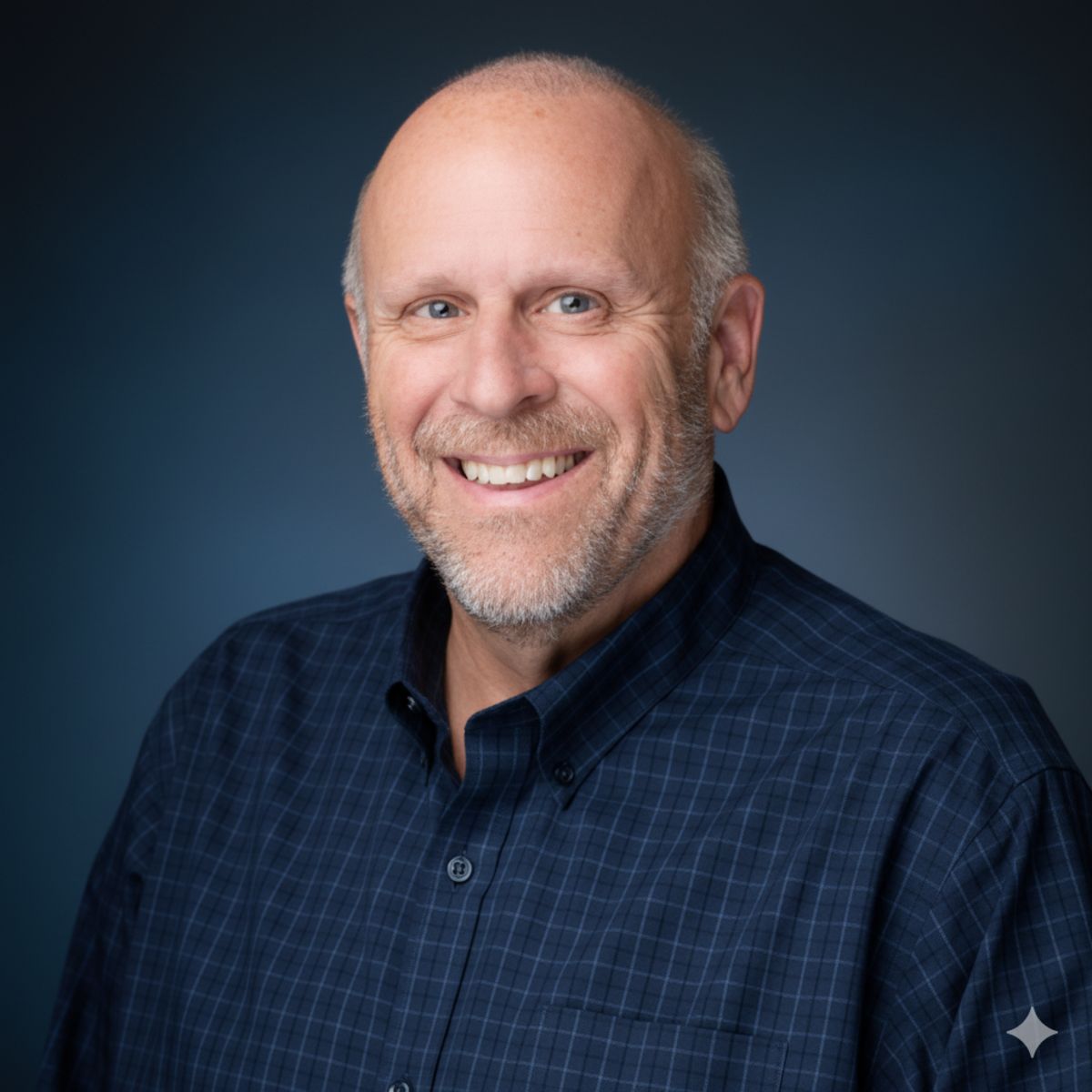

By Curt Roese | Published: March 4, 2026
Professionals 55+ can build a profitable second act business by converting decades of corporate expertise into consulting, coaching, or course-based income — without risking retirement savings. The most common barrier is not a lack of experience. It is the inability to clearly communicate what that experience is worth and to whom. This guide walks through exactly how to close that gap.
In this article you will find the financial case for acting now, a framework for identifying which stage you are in, the three delivery models available to experienced professionals, and the platform and strategy decisions that determine whether your second act becomes a real business.
Why Professionals 55+ Are the Fastest-Growing Entrepreneur Segment
The numbers behind second act businesses are significant and growing.
More than 4.1 million Americans are reaching retirement age every year through 2027, with roughly 11,200 turning 65 every single day (AARP, 2024). That demographic wave is colliding with a financial reality that makes continued income not optional for most. An AARP survey found that 20% of adults 50+ have no retirement savings, and 61% worry they will not have enough money to support them through retirement.
That income gap is driving a shift. Baby boomers of retirement age now account for 30% of all small business owners in the United States, and 75% of them report being happy owning a business (Shopify Business Report, 2025). The reasons are clear: 64% of workers 50+ believe age discrimination exists in the workplace, and 35% of employers consider certain ages too old for new hires (AARP Workforce Trends Study). Entrepreneurship is not a backup plan for this group. It is increasingly the primary plan.
Research from Babson College confirms what experience suggests: the mean founder age for the fastest-growing new ventures is 45. Corporate experience does not expire. It compounds.
Are You in the WHY, the WHAT, or the HOW?
Before choosing a platform, a price, or a business model, you need to know where you are in the process. Not every 55+ professional is in the same place, and the advice that helps someone in Stage 1 can actually confuse someone in Stage 3.
There are three distinct stages in the second act business path.
The WHY Stage is where most people begin. The core question is "should I even do this?" The challenges here are identity-based — who am I without my title? — and financial. Will the income be real enough, fast enough, to matter? The work at this stage is building conviction that your expertise is genuinely marketable and that a low-risk path exists.
The WHAT Stage is where people get stuck most often. You know you want to build something, but you cannot yet articulate the offer, the audience, or the right delivery model. Consulting, coaching, and course-based businesses each require different skills, time commitments, and infrastructure. Choosing the wrong model costs months.
The HOW Stage is execution. You are clear on the offer and the audience. What you need now is pricing methodology, platform selection, client acquisition strategy, and the financial systems that keep a solo business running cleanly.
Knowing your stage tells you exactly what you need next — and what to ignore.
Which Business Model Is Right for Your Second Act?
The three primary delivery models for 55+ professionals each have distinct advantages and trade-offs. Choosing the right one depends on your expertise type, personality, and income goals.
| Model | Best For | Income Range | Scalability |
|---|---|---|---|
| Consulting | Process, strategy, implementation expertise | $5K to $50K per project | Limited. Trades time for fees. |
| Coaching | Personal and professional development expertise | $500 to $3K per client per month | Medium. Group coaching scales. |
| Course / Cohort / Community | Teachable frameworks and methodologies | $197 to $1,997 per student | High. Content scales without more time. |
Consulting suits professionals whose value is in solving a specific organizational problem. Former CFOs, operations leaders, HR executives, and industry specialists often find this model the most natural transition. The income ceiling per project is high, but the business scales only as far as your available hours.
Coaching works well for professionals whose expertise lies in developing people rather than solving systems problems. The recurring revenue model creates more predictable monthly income than project-based consulting.
Course, cohort, and community businesses require the most upfront build time but offer the highest long-term scalability. If your expertise is a repeatable framework that others can learn and apply, this model converts that framework into a product that sells without your ongoing time.
Most 55+ professionals start with consulting because it generates revenue fastest with the lowest startup cost. Many eventually layer coaching or courses on top as a second income stream.
Why Experience Alone Does Not Create Income
This is the hardest truth in the second act business path, and the one most people avoid confronting directly.
Decades of corporate experience create genuine expertise. That expertise has real market value. But the market cannot pay for something it cannot understand. The gap between what you know and what you earn is almost always a communication gap, not a competence gap.
People do not hire based on a resume. They hire based on how clearly you connect your specific experience to the problem they need solved right now. A former CFO who says "I have 30 years of financial leadership experience" is describing a career. A former CFO who says "I help founder-led companies prepare for their first outside capital raise" is describing a service someone will pay for tomorrow.
This is the work of the WHAT stage: converting a career into a positioned offer. It requires clarity about who your ideal client is, what their most urgent problem is, and why your specific background makes you the right person to solve it. Without that clarity, marketing is noise and pricing is guesswork.
The lesson that lands hardest for most experienced professionals: experience alone does not create income. Marketed clarity does.
How to Choose the Right Platform for a Second Act Business
Platform decisions matter because the wrong choice wastes months. The right choice creates infrastructure that compounds over time.
The most important strategic decision for a 55+ expertise business is whether your primary audience relationship lives in an inbox, on a platform, or on social media. Each has fundamentally different implications for ownership, reach, and long-term leverage.
A newsletter-first model means your primary content vehicle is an email you send directly to subscribers you own. No algorithm controls your reach. No platform change disrupts your audience relationship. Every subscriber is a direct connection.
For professionals building consulting, coaching, or course businesses, the newsletter serves two functions. It builds trust with potential clients over time, and it creates a recurring touchpoint that demonstrates expertise before anyone spends money.
Kajabi is an excellent all-in-one platform for professionals whose primary product is an online course or community. It handles course hosting, payment processing, and email in one place. For a course-first business, it is difficult to beat.
Beehiiv is built specifically for publishers whose business model is the newsletter itself. It has stronger growth tools, referral infrastructure, and monetization features for operators who want the inbox relationship to be the core of the business — not a support function for something else.
The platform serves the strategy. Define the strategy first.
Why LinkedIn Engagement Beats LinkedIn Broadcasting for 55+ Professionals
Many experienced professionals are posting thoughtful content on LinkedIn and watching it disappear into the algorithm. It is a frustrating place to build from, and the frustration is legitimate. Organic reach for most accounts continues to decline without paid amplification.
The reframe that changes the equation: stop trying to get the algorithm to distribute your content and start earning attention directly through contribution.
The approach that works is consistently showing up in communities your target audience already trusts. Add genuine value in comment sections. Ask smart questions. Share perspective without pitching. Over time, people start clicking your profile because your comments helped them think more clearly.
Three thoughtful comments per day on content your ideal clients already follow. No links. No pitching. Real perspective that demonstrates your expertise in context. The compounding effect of that activity over 90 days is more valuable than 90 posts that never reach beyond your existing followers.
Earned attention converts. Algorithmic reach rents.
The Done-For-You Shift: What It Means for Second Act Businesses
The market for static information products — courses that deliver content for a student to absorb and apply on their own — has been fundamentally disrupted by AI. Information is no longer scarce. What people pay for now is better decisions, not more content.
The shift is toward done-for-you tools: interactive experiences that take a user's specific inputs and produce a personalized output. Not "here is how to price your consulting services" but "enter your background, your market, and your income target, and here is the rate you need to charge."
For 55+ professionals building second act businesses, this shift creates two opportunities. First, the barrier to delivering high-value personalized guidance has dropped significantly. Second, the professionals who build decision-support tools around their specific expertise will be far more defensible than those selling generic information.
The tools that matter most for this audience are expertise positioning, delivery model selection, pricing calculation, and retirement income integration — the four decisions that determine whether a second act business succeeds or stalls.
Frequently Asked Questions
Is it too late to start a consulting business after 60?
No, and the data confirms it. The mean founder age for the fastest-growing new ventures is 45, according to Babson College research. Professionals 60+ bring pattern recognition, professional networks, and hard-won judgment that younger consultants cannot replicate. The market values that combination. The question is not whether to start — it is how to package what you already have.
How do I figure out what I can actually charge as a new consultant?
Start with market research, not guesswork. Find three to five people with comparable backgrounds who are actively consulting in your field and examine their publicly listed rates or engage with their communities. Layer in your specific outcomes and your target client's ability to pay. A former Fortune 500 CFO advising a $5M company on their first capital raise has significantly different pricing leverage than a generalist financial advisor.
What is the safest way to start a second act business without risking retirement savings?
Service-based businesses — consulting and coaching — require almost no startup capital. You need a professional email, a simple website, a scheduling tool, and a basic contract. Total monthly cost is well under $100. Begin with one client at a rate that generates meaningful income before investing in platforms, tools, or marketing infrastructure. Validate demand before building supply.
How much can I earn before it affects my Social Security or Medicare?
This is the question most 55+ entrepreneurs never ask until it is too late. If you are collecting Social Security before full retirement age, the earnings test in 2026 reduces benefits by $1 for every $2 earned above $22,320. Medicare IRMAA surcharges kick in at modified adjusted gross income above $106,000 for individuals. These thresholds require planning, not panic — but they must be modeled before you price your services and set income targets.
What is the difference between consulting, coaching, and online courses for someone 55+?
Consulting solves organizational problems for a fee — typically project-based and high-ticket. Coaching develops the individual client through a structured recurring engagement. Online courses package your expertise into a teachable framework that students buy and consume independently. Each has different income profiles, time requirements, and personality fits. Most professionals start with consulting for the fastest path to revenue.
Do I need a large social media following to build a second act business?
No. The professionals building the most durable second act businesses are doing it through direct audience relationships — primarily newsletters — rather than social media reach. A newsletter list of 500 highly engaged subscribers in your specific niche will generate more consulting clients than 5,000 LinkedIn followers who are not your target audience. Own the relationship. Do not rent it from a platform.
How do I write a consulting proposal if I have never done it before?
A strong consulting proposal answers four questions: what is the specific problem being solved, what is the outcome the client can expect, what is the process you will use to get there, and what is the investment required. Keep it to two pages. Avoid scope creep by defining what is explicitly outside the engagement. Price based on the value of the outcome, not the hours you will spend delivering it.
Where to Start If You Are Ready to Build
The second act business path for professionals 55+ is well-documented and genuinely achievable. The data confirms the market is there. The frameworks for building it exist. What separates the professionals who launch from those who stay stuck is almost always one thing: clarity about where they are in the process and what the very next step is.
If you are in the WHY stage, the work is building conviction that your expertise has market value and that a low-risk path exists. If you are in the WHAT stage, the work is positioning — converting your career into a specific offer for a specific audience. If you are in the HOW stage, the work is execution: pricing, platform, first client.
All three stages are served inside the Retirepreneur Hub — a free resource library built specifically for professionals 55+ making this transition. Templates, pricing guides, delivery model frameworks, and startup checklists are available at no cost, with no credit card required.
The expertise you built over 30 years does not expire. The question is whether you are ready to package it.
Next Steps
Identify which stage you are in — WHY, WHAT, or HOW — and access the corresponding resources inside the Retirepreneur Hub. If you are not yet subscribed to Retirepreneur Weekly, join at retirepreneur.com/subscribe for practical, no-hype guidance every Tuesday.
Sources: AARP Retirement Research 2024; AARP Workforce Trends: Age Discrimination Study; Shopify Retirement Business Report 2025; Babson College / Age and High-Growth Entrepreneurship Research; Guidant Financial 2025 Small Business Trends Report; Global Entrepreneurship Monitor 2024/2025 U.S. Report.
Curt Roese is a CPA, former CFO, and the Founder of Retirepreneur — a platform helping professionals 55+ turn decades of expertise into profitable consulting, coaching, and course-based businesses without risking retirement security. He earned his M.S. in Entrepreneurship from the University of Florida and is building Retirepreneur in real time alongside his audience. Learn more about Curt.